The sports car project enters a new phase
The Italian no. 2 and 3 are finished in spring 1958
Frua P958-X2 specifications
Frua P958-X3 specifications
The prototype photo session at Stora Holm
Test driving the P958-X1
Volvo’s management has it’s doubts about the sports car project
Helmer Petterson’s decisive letter to the Volvo management
Engellau gives the ‘go ahead’ for project “Volvo Florida”
The sports car is planned as a coupe – and as a convertible
The future production of the sports car in Sweden
Aiming for the American market
The P-958 is approved by the AB Volvo board
Plans for developing the sports car
Pressed Steel Co Ltd and Jensen Motors Ltd
Pressed Steel makes a quotation
The Volvo – Jensen Motors Ltd. cooperation
The contract between AB Volvo and Pressed Steel Co. Ltd
Jensen Motors Ltd to assemble the cars
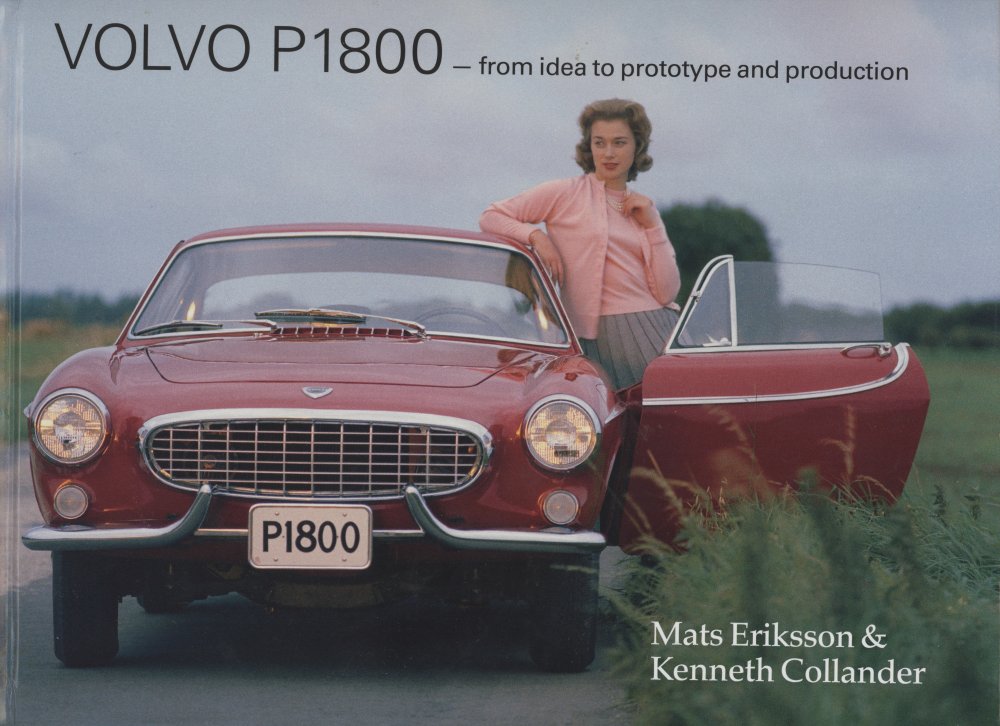
The sports car project enters a new phase
At the turn of the year 1957–58 when prototype 1 was almost completed, Gunnar Engellau traveled to Turin to review it on site. He gave it his approval and is also said to have been so pleased with what he saw that he decided that the serial production variant should follow the prototype’s execution as far as possible. The future looked bright and everything indicated that the new sports car could, at best, come onto the market as early as the end of 1958.
Volvo’s chief engineer Tor Berthelius discussed with Karmann about a possible production of body tools and the production of complete bodies, something that Volvo’s plants in Sweden did not have the capacity for at the time. In order for Karmann to study the car in its entirety, Helmer Petterson was responsible for transporting the prototype 1 by truck from Turin to Karmann’s headquarters in Osnabrück, Germany. The car at this time was not quite completed. It lacked some components to be completely finished and in executable condition. Åke Björksund therefore traveled to Osnabrück in early 1958 to get the car ready. Björksund traveled from Gothenburg together with one of Volvo’s fitters, Pehr Dela, in a Volvo PV 444 fully loaded with various components that would be mounted on prototype 1.
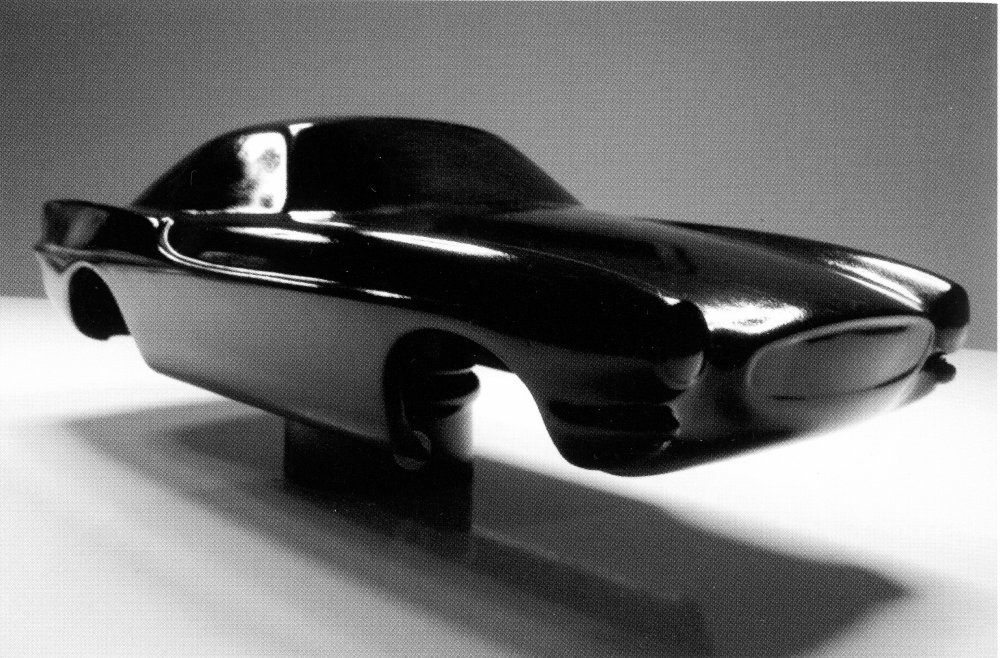
When the car was finally finished and drivable, it was time for parts of the Volvo management to travel down to Karmann in Osnabrück for inspection and test drive. During the tests, the car came up to about 170 km/h and, according to Gunnar Engellau, it had “except proper acceleration characteristics”. On this occasion, Pelle Petterson also participated and before this meeting, Pelle had during his time at Frua made four plaster models of the sports car in scale 1:10 (43 cm long) after the car received its final shape. The models were equipped with wooden wheels and painted in different colors, including green metallic. The models were handed out at the time to representatives of Volvo’s management and then followed home to Volvo in Gothenburg. They were then put away and when it came time to renew the Volvo 1800, they were picked up after which clay was laid on them as the basis for further modeling. One model, incidentally, was made without a roof, and on another, the aft part was adjusted. One has features from the Volvo 1800ES. Three of these models are preserved at Volvo.
The Italian no. 2 and 3 are finished in spring 1958
On April 9, Helmer sent a memo to Svante Simonsson in which he indicated that these cars were not yet ready, but also that some changes compared to prototype No. 1 were desirable and intended to be implemented. Petterson then traveled down to Turin the following week to clarify changes to the rear floor, front cardan tunnel and new radiator as suggested by the passenger car drawing office. Likewise, a new gearbox cover would be fitted. Petterson also announced that new proposals for the design of the door panel, control buttons including its placement, handbrake placement and rear seat were under development. What was also to be determined during Petterson’s visit to Turin was upholstery and color combinations, upholstery materials (Hornschuh Weisbach) as well as adjustment of lamps and wiring. Petterson asked Simonsson to prioritize these measures because prototypes 2 and 3 were expected to be ready from the paint shop by the end of April. The wooden structure that had been made at Frua was by now badly burned after the plates were joined together with welding and also generally worn out after the three prototypes had been manufactured. Pelle believes the wooden body was scrapped after the prototypes were made.
Frua P958-X2 specifications
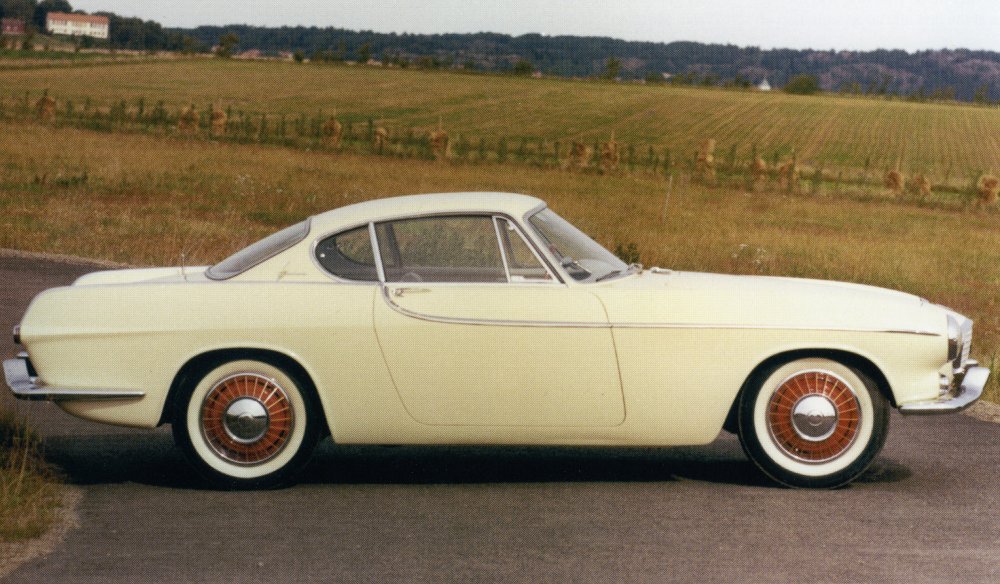
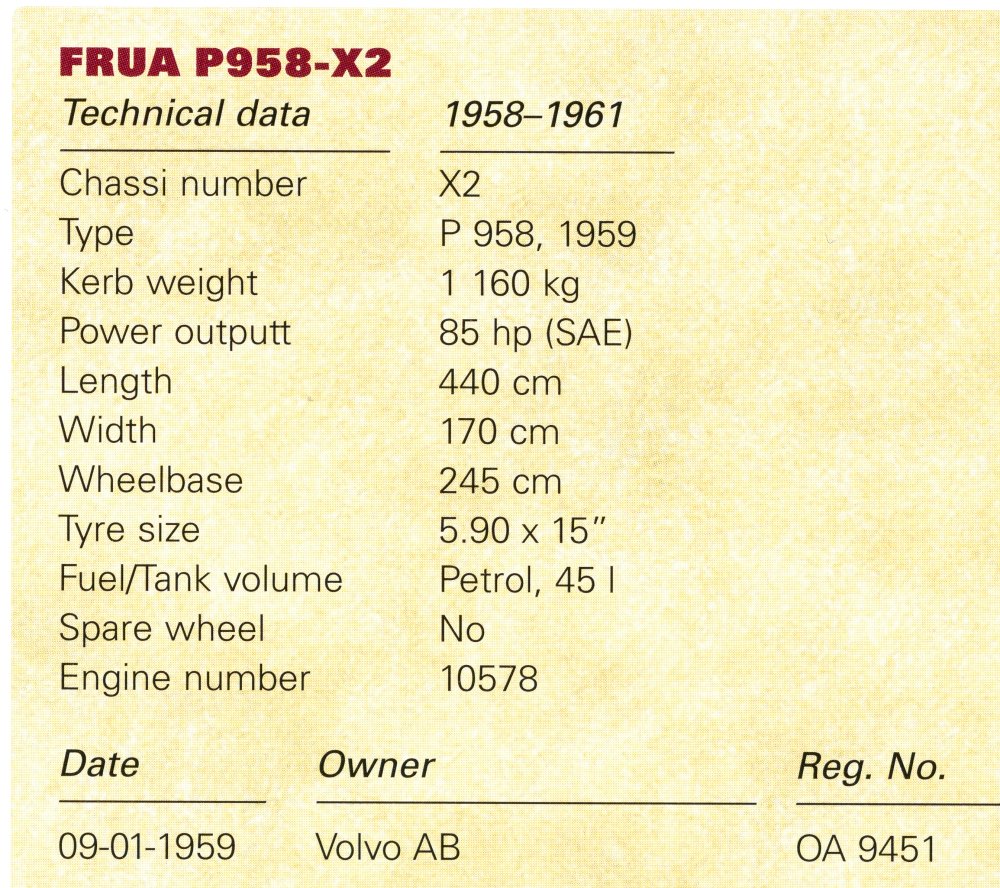
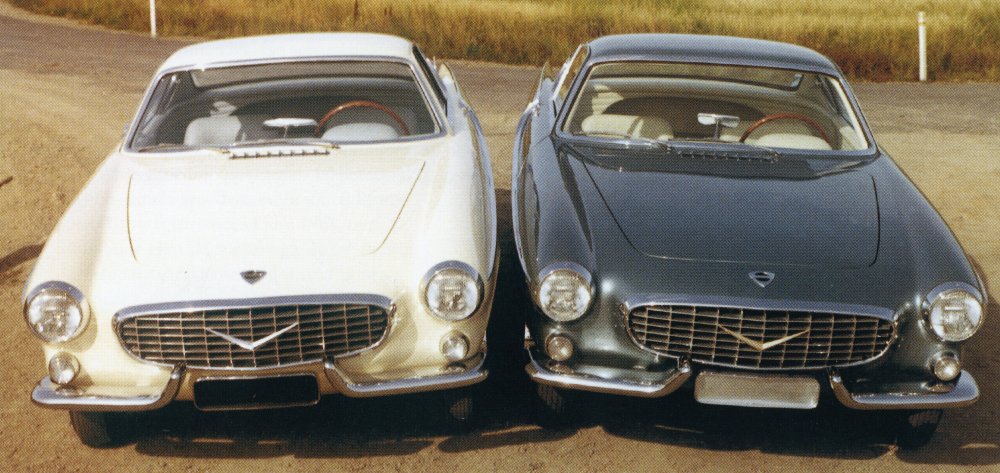
The second car, the P958-X2, was produced in the first months of 1958 and was completed in May. The car was creamy white with light blue interior and red rims. It was inspected by Carl L. Engström in August 1959 and registered in Sweden on September 1, 1959 with registration number OA 9451 and Volvo AB as owner. The P958-X2 was used for extensive testing and advertising photography, which made it appear frequently in the motor press. It was also shown at several international car shows, including at the first public event at the Brussels Salon in January 1960. Volvo carried out some rebuilds on the car during the time as a test car. A number of technical details were replaced, mainly it can be mentioned that a servo-assisted brake system with disc brakes was mounted in the front. Before the car was shown at the Brussels car show, the stern was completely rebuilt and at the same time the interior was renovated. In connection with the rebuild, the car was repainted in approximately the same creamy white color as before. The P958-X2 was de-registered in June 1961, but is still in fine condition and has since been included in the historical collections at Volvo’s museum in Arendal, Gothenburg.

Frua P958-X3 specifications
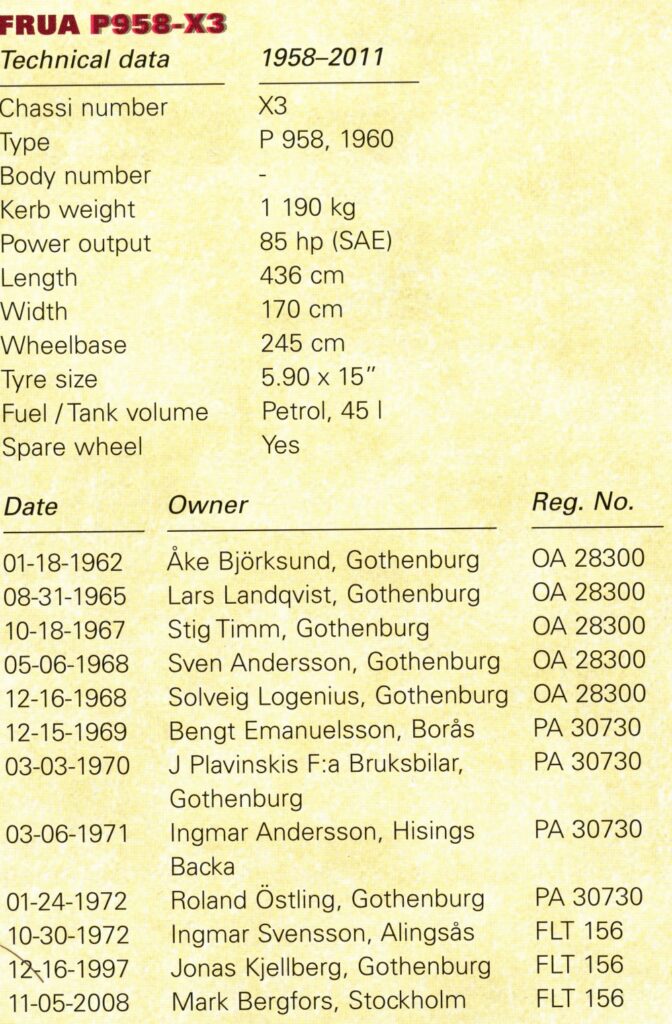
The P958-X3 was the third and final prototype produced at Frua’s factory in Turin. It was also handmade and the P958-X3 was produced in the late spring of 1958. It was steel grey with red interiors and red rims, but some of the original details then changed over time, including the rear section being completely rebuilt in England and in connection with that the car was repainted in a shade similar to the original colour. The car appeared frequently in the motor press and was shown at international auto shows, including at the International Autoshow in New York in April 1960. It was also shown at other exhibitions in North and South America and in connection with such a tour, the car actually disappeared. For about seven months, they searched for the car before it could be located locked in a container in a port in South America, after which it was then transported back to Gothenburg.

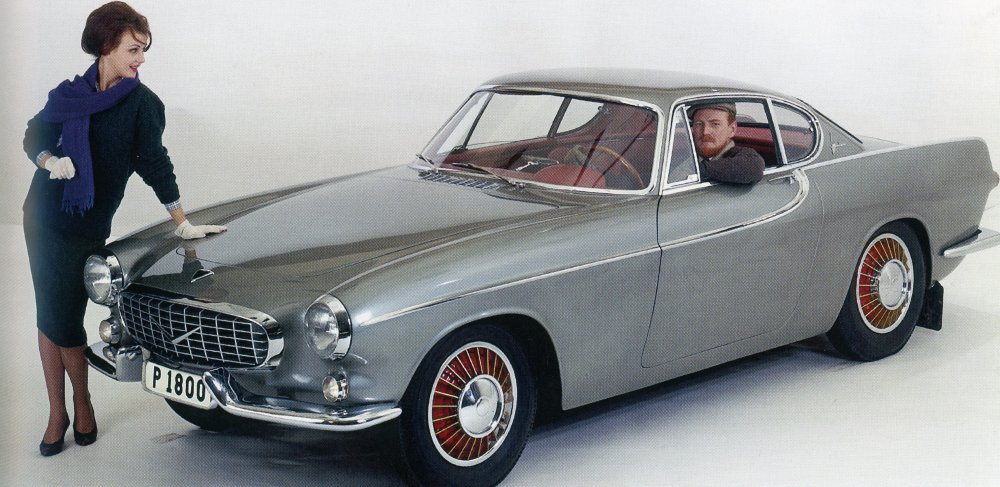
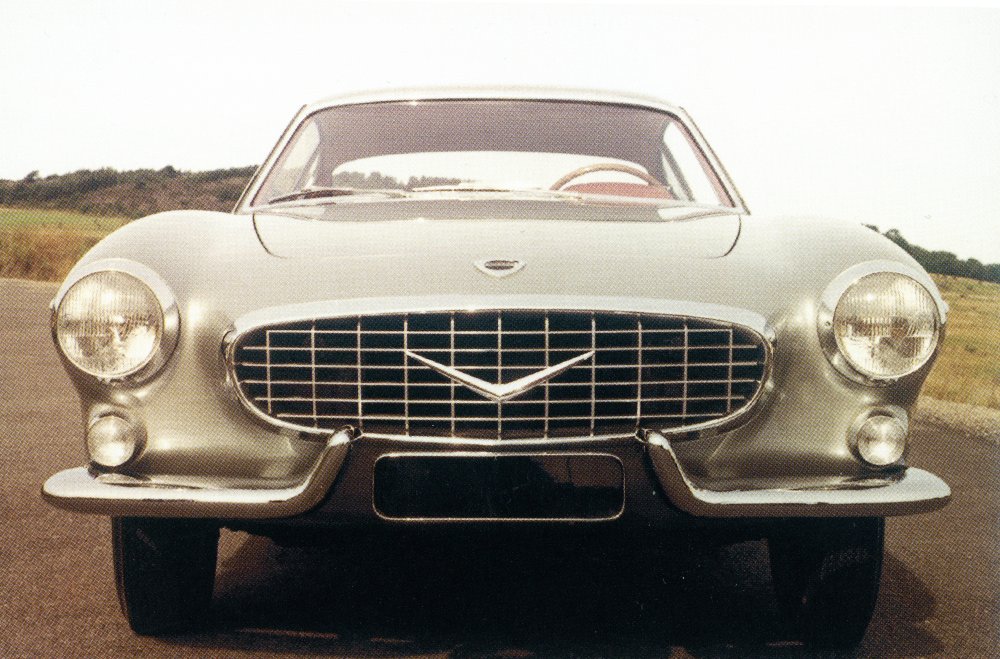
The three Italian prototypes were not exactly similar in design but differed from each other in some details, e.g. the rear-view mirrors had different designs, the V in the grille was chromed on the P958-X2 and P958-X3 and in gold or brass-colored design on the P958-X1. The P958-X2 additionally had a black bottom on the license plate. After the three Frua prototypes served as a link between drawing boards and series production, they were considered by Volvo as consumed and in some cases employees were given the opportunity to buy these cars for private use, however, with some reservations. Åke Björksund was the first private owner of the steel grey P958-X3. In connection with the P958-X3 being divested from Volvo, a special contract was drawn up between Volvo and Björksund. The contract included, among other things, a provision that the car could not be resold but that it would be notified to the next buyer that no spare parts were available for this car. It was handmade at Frua. When Björksund bought the car, it had, as you know, been stored in a container for a long time and as a result the metallic grey cellulose varnish had become very bad. The car was repainted by Bil & Truck in Gothenburg in the light blue color, which was included as an original color in Volvo’s range.
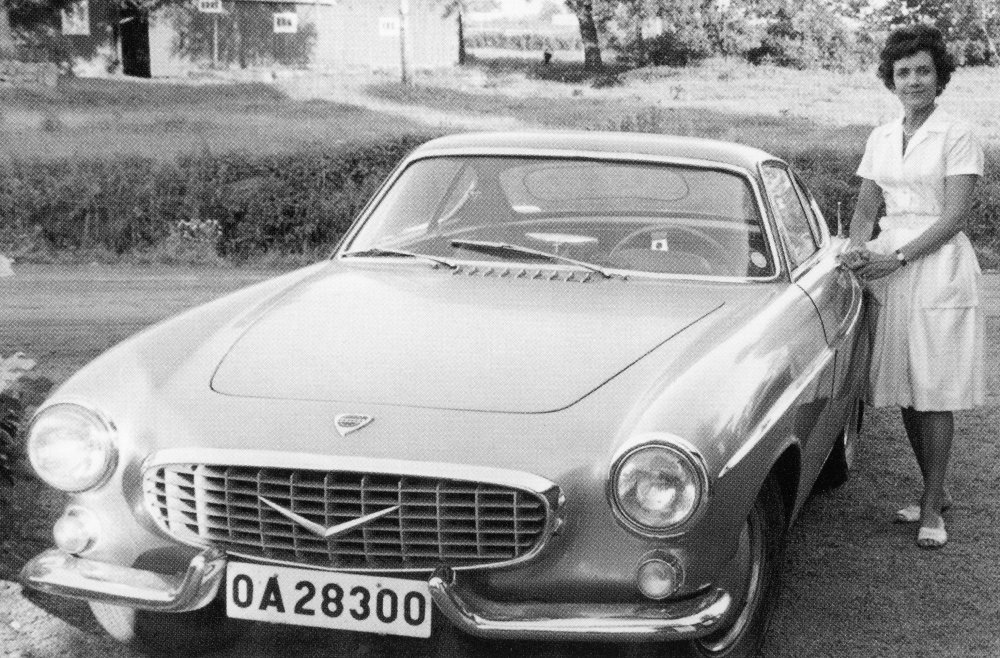
The vehicle was first registered in January 1962 and was in use until it was decommissioned on March 4, 1970. Then the car was in very poor condition and with serious rust damage. It is currently undergoing a complete renovation by Mark Bergfors. Some traces of the car still remain from its time as a prototype, such as a different shape and design of the opening where the windshield is mounted, the different back cover and the hole for gasoline filling on the back cover. Since the rust damage to the lower parts of the body was extensive, large sections of the original hand-grounded body have been replaced with series-produced sheet metal. Large parts of the base plate have also been replaced and now come from an Amazon 1957
The prototype photo session at Stora Holm
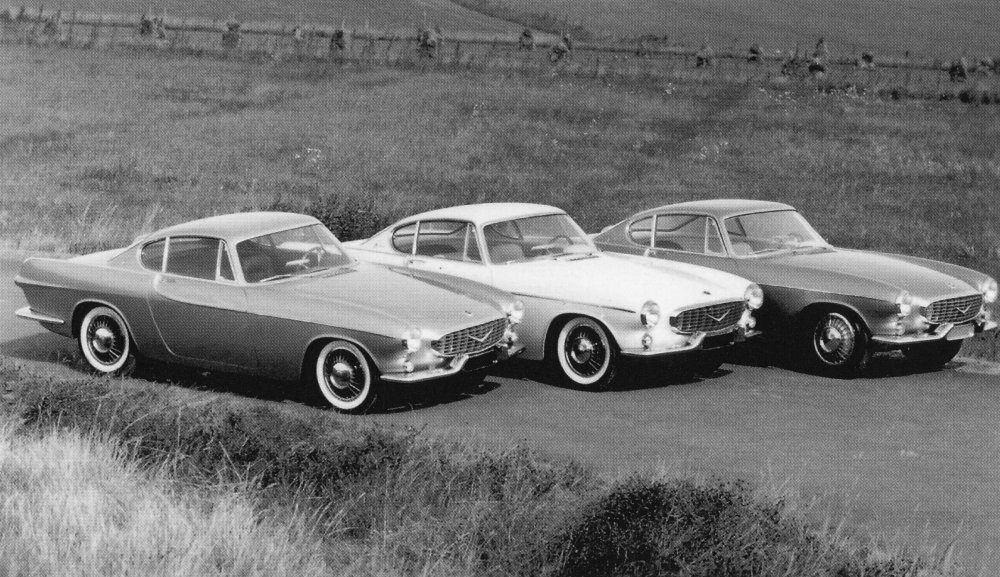
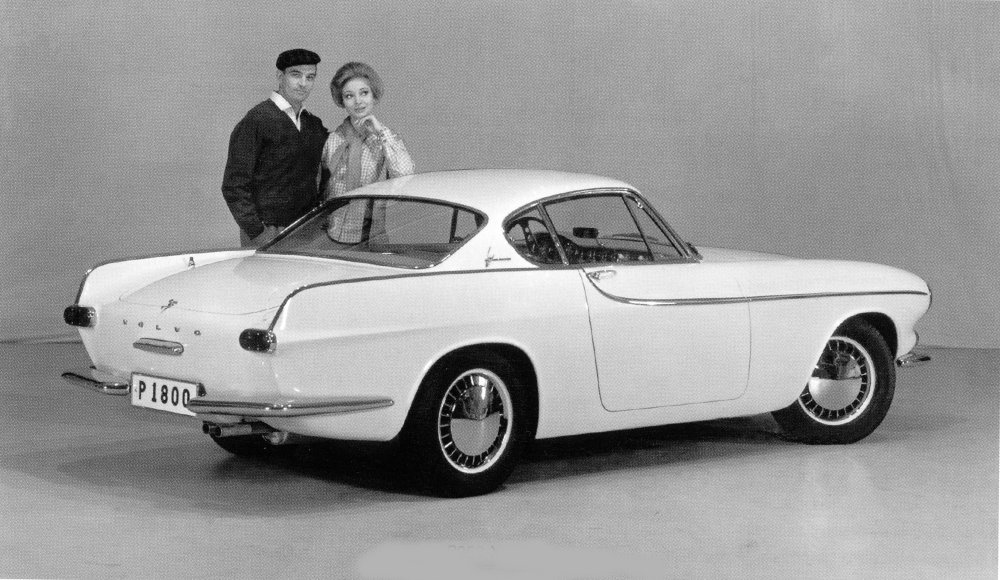
One of the few occasions when the three Italian prototypes were shown at the same time was at a joint photo shoot of the cars, which took place at Stora Holm sometime in the late summer of 1958. It was Ralph Johansson at Volvo’s advertising department who, on direct behalf of Gunnar Engellau, arranged this photo shoot.
Test driving the P958-X1
Within Volvo, the sports car project was called “P-1200 Sportvagn”, but the name “Volvo-Florida” also appeared. As the prototypes were completed during the first part of 1958, the work on the tests could begin in earnest. The work of finding manufacturers for the car continued and after his stay with Karmann, prototype 1 was transferred to NSU. One of the test runs focusing on top speed took place in the spring of 1958 near Baden-Baden in Germany. Arnold Olausson was at this time working at Volvo’s engine laboratory under Åke Larborn. Olausson says that he and a mechanic traveled by car from Gothenburg to Frankfurt-am-Main where Helmer Petterson was picked up and after picking up the P958-X1 at NSU together, the journey continued towards Baden-Baden, in whose vicinity they were housed at one of Bosch service stations. Here, the P958-X1 was hard-tested under the supervision of German timekeepers from Bosch. Speed tests were carried out between official milestones after the roads and subjected the engine to high stresses that gave rise to both broken cylinder head gaskets and broken engines.
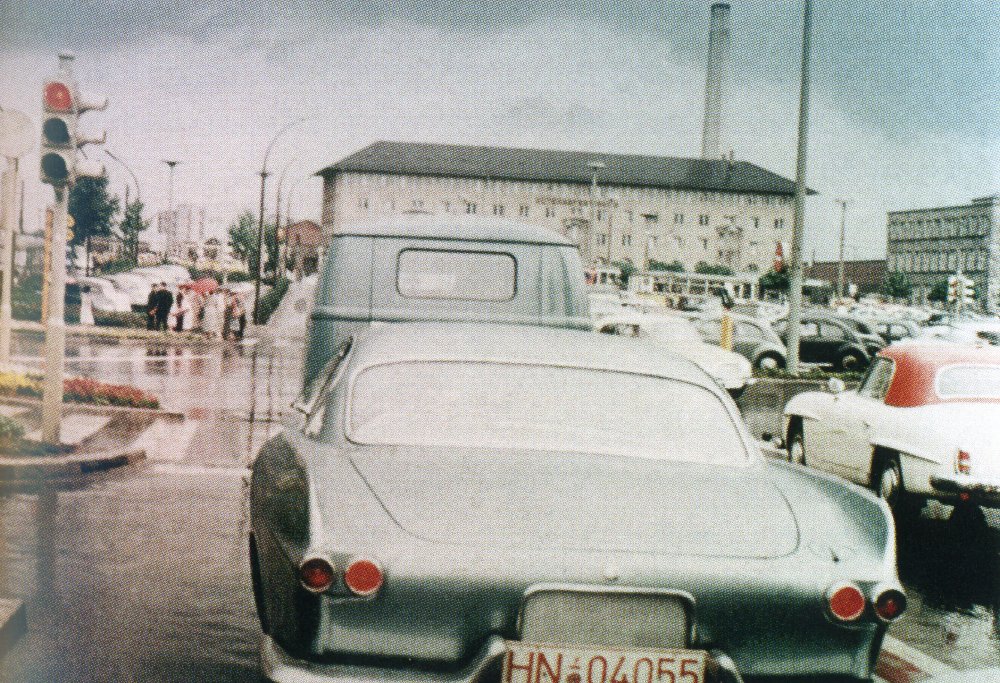
This test drive was recorded by Helmer Petterson and in a memo of 9 May 1958 he provided Gunnar Engellau and Svante Simonsson with a detailed report with his experiences and views. The purpose of the test was to determine the speeds that could be achieved with the sports car and B16B engine as well as 4.56:1 or 4.1:1 rear axle. Since the car was not yet driven in, the sports car first got a run-in distance of about 100 miles and then it was clocked a few times at about 163–167 km/h, with some problems for the engine to reach higher speed. It turned out that the ignition system was to blame, but after advice from Olausson, it was decided to test with 12-volt systems and other cylinder heads. 12-volt systems with high-efficiency coil proved to be far superior to 6-volts in the higher revs
A top speed (clocked kilometer) of 171.5 km/h was finally achieved in very difficult conditions in traffic and darkness on the “Autobahn” with two people in the car and 75 kg of luggage. With 4.56:1 rear axle and 3% slip, it gave 6700 rpm. At these high revs, new problems arose, which in turn were due to poor cylinder head gaskets (copper/asbestos) that began to glow, causing ignitions until they finally blew apart and the water flowed into the engine with the cutting of pistons as a result. Petterson noted that during a week’s test drive, three cylinder head gaskets were wrecked and the engine cut the same number of times. After each repair, the engine ran very well but between 6000 and 7000 revolutions difficulties occurred. The solution was a new type of cylinder head gasket that the laboratory at home in Gothenburg was given the task of trying out.
In light of these tests, Petterson estimated that the top speed should be around 177 km/h with a rear axle of 4.56:1 and 182 km/h of 4.1:1 with a B16B engine in full trim. In his report, Petterson heaped praise on the sports car and pointed out that the car’s road characteristics were already in their raw condition excellent and should be even better with harder shock absorber installation. At speeds above 160 km/h, the car was very steady on the road and was also very wind-stable. However, the brakes were not good and a deceleration from 170 km/h in traffic was very risky. Petterson further describes that: “The wind howl in the car at high speeds is significantly smaller than the Amazon and the ventilation is good as well as driving position and visibility excellent. In order to determine the performance of the car, it would be advisable to first test drive an engine in the laboratory and then drive it in a car to determine the power requirement at the higher speeds.”
Volvo’s management has it’s doubts about the sports car project
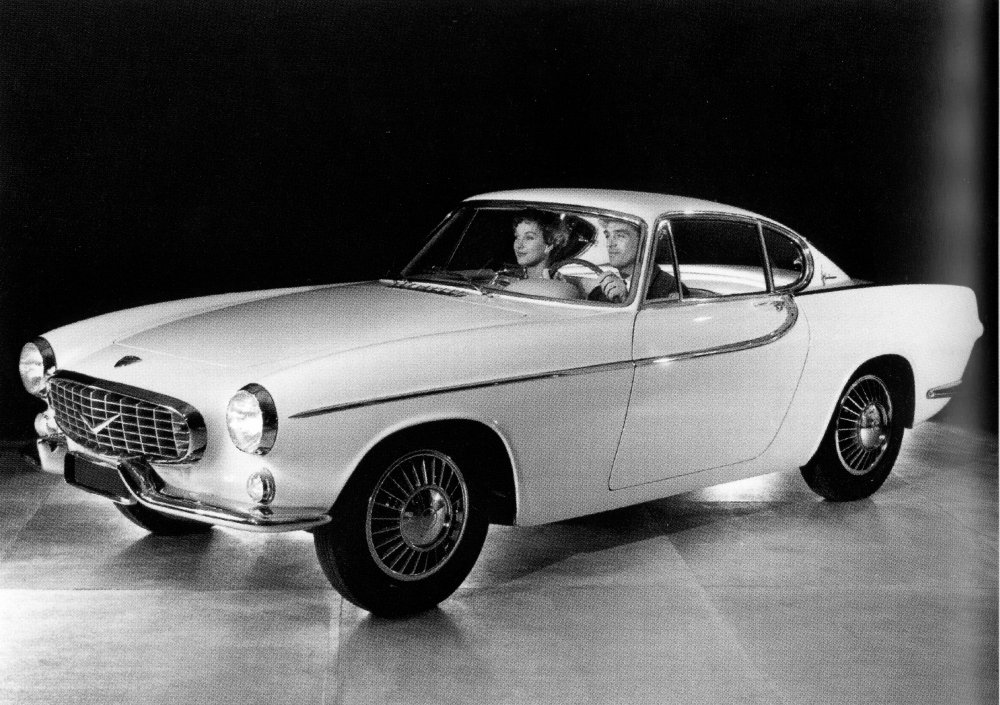
According to the original plans, Volvo expected a start of production at the end of 1958, but this would prove impossible and for a period during 1958 it looked as if there would be no new sports car. In an opinion of 30 April 1958 on the sports car project, Director Svante Simonsson summarized his thoughts in which he confirmed that the question of realizing or writing off the sports car project had been open for a long time. Simonsson noted that Volvo’s strong expansion in passenger cars in recent years had had a negative impact on the development side and he believed that Volvo’s resources, both human and monetary, should primarily be invested in the conventional volume car Amazon and in a successor to the same. He also pressed the need for a two-door Amazon and a station wagon while predicting an excessively heavy load on Volvo’s technicians in the event of a parallel investment in a sports car.
Finally, Simonsson concluded that: “I think what I have said above strongly suggests that the sports car project should be shelved. The only reasons that would speak so strongly against what I said above that the project should still be realized must be of a sales nature. If the project is realised, it will tie up considerable capital that we will certainly be very short of and, moreover, to some extent significant staff. In conclusion, I would like to say that Volvo needs to concentrate all resources on the branches of activity that today are within Volvo’s manufacturing area. If our scarce resources are to be fragmented by including the sports car on the manufacturing programme, there must be extremely strong sales reasons that force this and those reasons cannot have anything to do with our natural home market but must be a ‘live or die’ in our most important current and intended export markets.
Simonsson’s views on the sports car project were seemingly fully representative of both parts of Volvo’s management and board and during the spring of 1958, just over six months after the choice of design, the board decided to postpone the project for various reasons and all of a sudden the sports car was a car without a home that faced an uncertain future.
Helmer Petterson’s decisive letter to the Volvo management
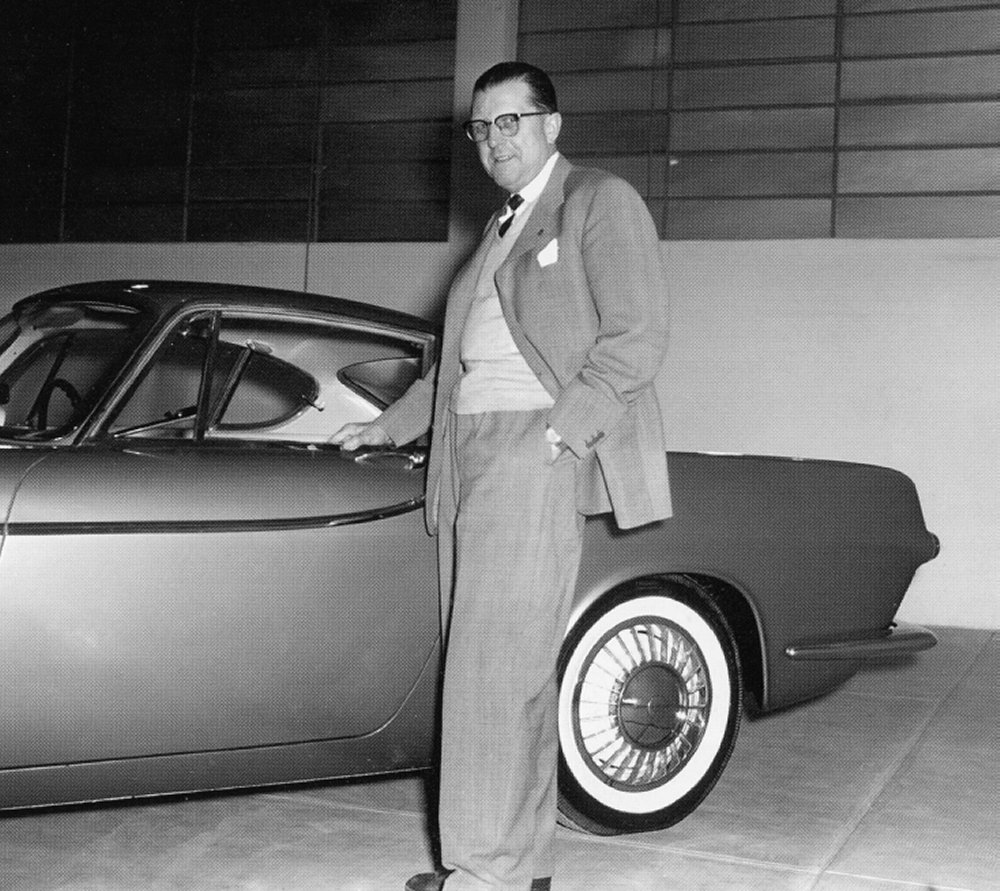
In light of the board’s position, consultant, businessman and visionary Helmer Petterson felt compelled to act and he did so with vigour. On May 13, 1958, he sent a letter about the “sports car project” addressed to Gunnar Engellau and Svante Simonsson. It would prove to be a crucial move to keep the project alive and to reach a definitive decision on whether the sports car should be or not be. The arguments that Simonsson lined up and that spoke in favor of holding off on the sports car project; “not to split Volvo’s technologies”, “that the investment is onerous”, “the uncertainty of the US market” and its gloomy view of the future did not at all match Petterson’s view. Instead, he turned those arguments into opportunities for Volvo. His letter included four pages of good arguments as well as a two-page calculus study.
By this time in May 1958, plans had been made for the car to be built in Germany, and Petterson stressed the importance of distinguishing between the components that Volvo would supply to the manufacturer – engine, gearbox, chassis details and flooring – and what the manufacturer would undertake to deliver in terms of design, manufacture of tools and development of finished cars. Pettersson pointed out: “I don’t see that we would have to be burdened with any techniques here beyond the work I can contribute myself. The Germans must do this part of the work with responsibility and our share should only be criticism of what is being done. We have our model car in general ready and it is important to essentially copy this car.” Petterson’s conclusion was that the load on the technical side should not be considered bothersome for Volvo and he believed that there was even a serious misunderstanding where the board believed that Volvo would also be responsible for the bodywork.
When it came to the investment cost of twenty million kronor, Petterson respected that the board was skeptical, but even here he saw opportunities and not difficulties. He therefore suggested that Volvo should place an initial order at the plant for 3000 cars and that Volvo’s investment in the project should, as far as possible, be transferred to the intended German company, which was entirely responsible for the design, tools and delivery of finished cars. He also indicated that Volvo dealers should actually commit to a certain number of cars by advance payment. Petterson’s arguments and proposals exuded tremendous confidence in the inherent potential that the sports car carried.
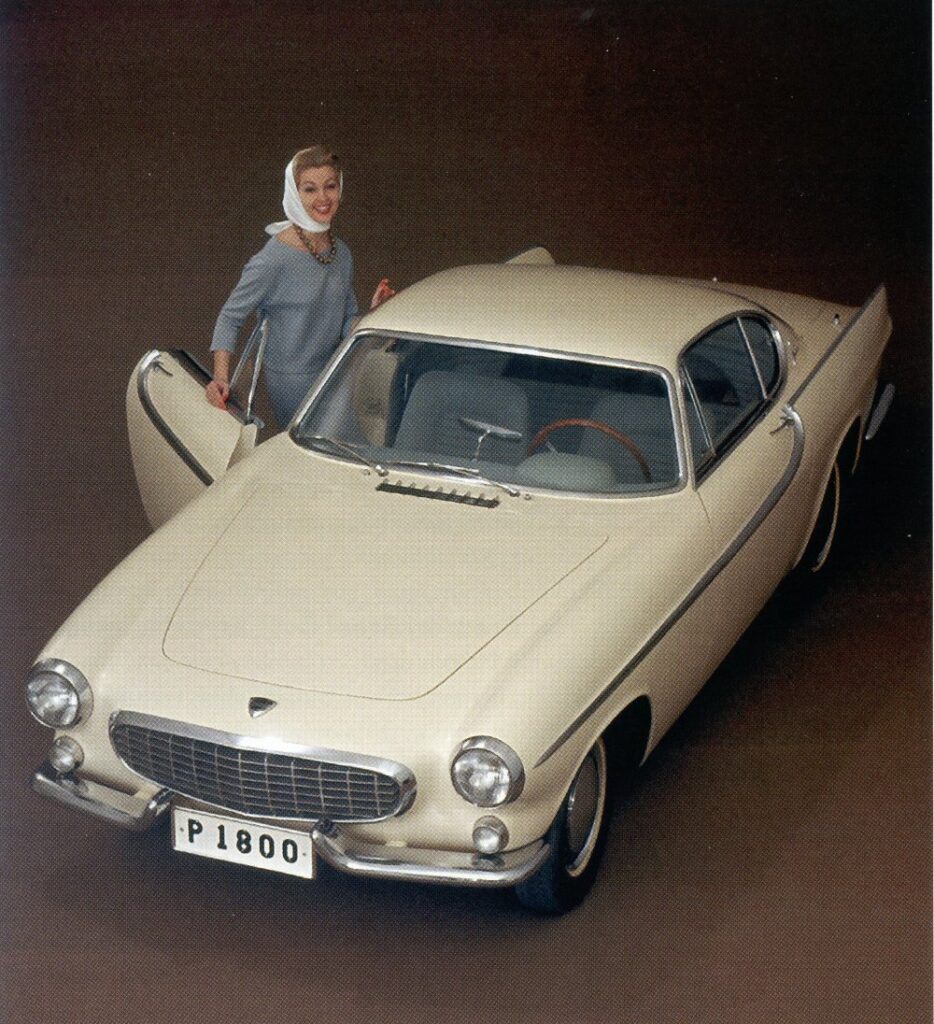
The criticism of a bet on the US market was handled just as skillfully by Petterson because it was not in the US where Volvo would primarily make the money because the impact on those cars was relatively small: “We should not invest in the Americans, the European market alone is powerful to pay for tools and start-up within two years. The American market does not need to guarantee that the deal will go together. When it came to the board’s arguments about the bad times, this was answered with: “The question is whether you do not face bad times and a tougher competition with new products even if this is a sports car. Why can you withdraw SEK 14000 for the Amazon and only SEK 10000 for the 444? After all, they have the same engine. Petterson also highlighted the current sales situation in May 1958 and referred to how Volvo’s competitors mobilized, both with Opel Kapitän and within the VW Group. Helmer Petterson ended his statement with both an important question and another forward-looking statement: … Will it be possible to keep our sales staff with the intensifying competition and how will their finances shape up if we do not give it something new in the foreseeable future? The sports car is not the cure, but it does show outwardly and commercially that we are doing something. The sports car can already in a couple of years be an economic safety valve for Volvo, the value of which should not be devalued even if the product does not belong to the main industry.
It would soon turn out that Helmer Petterson’s letter paid off and made a strong impression on both the CEO and the board. He saw solutions where others saw difficulties and the project stayed alive during the summer of 1958, but not all problems and challenges were yet dealt with, not by a long shot. For example, it was clear from the start that Volvo did not have sufficient production capacity in Gothenburg, so it had to renew its various external contacts to find suitable solutions for both manufacturing and assembling the sports car.
Engellau gives the ‘go ahead’ for project “Volvo Florida”

Until the summer of 1958, the new sports car, “Volvo-Florida”, had been completely unknown to the public. Around that time, however, rumors began to spread that a sports car was being planned. It has sometimes been claimed that it was Helmer Petterson himself who deliberately leaked information outside Volvo so that the project would not risk being shut down. In despair of perhaps never seeing the sports car become a reality, Petterson began to plan to build the car himself with Volvo components. Pelle Petterson says: “My father was a very energetic man, independent and impatient. He thought it was a bit slow and cumbersome at Volvo and actually had ideas to break the product loose and start up on his own.“
On August 14, 1958, Gunnar Engellau sent a letter to the Volvo Board of Directors informing about and clarifying his opinion regarding the sports car. In his letter, Engellau explained that Volvo at that time lacked the capacity to build the sports car in Sweden. The reason was that Olofström, who was involved in making the body, lacked the capacity to make tools, perform the pressing and assembly of the bodies. Volvo’s passenger car drawing office, working on a two-door Amazon, could not, without this project being seriously compromised in terms of time, devote itself to doing the entire design work on the sports car. In addition, Volvo also lacked the capacity to assemble the car in the existing plants. Engellau continued: “For that matter, the other possibility of developing the cars has been that in the early years it is manufactured and assembled abroad and that Volvo has then chosen Germany where a large number of different industries have been visited and studied.
Engellau revealed that after intensive processing, they had two offers, partly from the bodywork company Drauz and partly from Hanomag, but that negotiations had also been held at an early stage with “the foremost German bodywork firm Karmann Werke”. However, this had after some time announced that due to increased orders from Volkswagen it could not undertake the construction of the sports car, but well the design work, the manufacture of tools and the pressing of sheet metal parts. In Engellaus’ view, a collaboration with Karmann would significantly relieve Volvo’s administration of the production of the car. In terms of price, the offers from Drauz and Hanomag-Karmann were practically identical and Volvo was of the opinion that both could carry out the assignment and achieve a first-class product, but it was clear that Engellau preferred Hanomag. In the event of a recapitulation concerning the timetable for the production of the sports car, it would mean at this particular time that the design and manufacture of tools would take fifteen months. After about twenty months, the car could be in serial production, but no earlier than 1960.
The sports car is planned as a coupe – and as a convertible
The conditions that would initially apply to the sports car were that it would be based on the Amazon undercarriage, the B16 engine in american version with 88 hp, the 4-speed box M4 made in Köping as well as the rear axle, brakes, steering device as they were largely in the Amazon. Engellau also clarified that the sports car was planned in two, possibly three, versions; Partly as a sports coupe and partly as an open sports car with a canopy. As an alternative to the latter design, a plastic hardtop could be added instead of the canopy for winter use.

The future production of the sports car in Sweden
As early as August 14, 1958, Gunnar Engellau indicated his intention that the sports car would eventually be manufactured in Sweden. Engellau explained: “An order from the German firm for tools and manufacturing and assembly should be able to be designed so that Volvo can take home both pressing and assembling the car after a number of years. However, such a measure is unlikely to be envisaged for the next four years because, as far as we can now assess in current plants, we will lack production capacity. However, should the relocation to a new passenger car factory be carried out according to the currently tentatively agreed plans, the production of the sports car together with other manufacturing objects in the current plants could be a great asset for Volvo. The aim would thus be to bring home sports car production in the future when Volvo’s own manufacturing capacity allows.
Aiming for the American market
Engellau again referred to the strong pressure that the Americans put on Volvo to come up with a new sports car: “Volvo’s representatives in America have very strongly emphasized the desirability of the car coming into being. They have set as a minimum for sales opportunities in America 3000 cars per year but believe that it should not be difficult to set aside 5000 sports cars because the elements that are now included in our cars, especially the engines will also be included in the sports car.
The sports car was, by all accounts, a significant part of Volvo’s overall strategic plan to enter the US market on a broad front. There was no doubt that the sports car was a pawn in a larger game, because individually the sports car was not an industry that would generate significant revenue for Volvo. Gunnar Engellau also attributed the following words to the board that would largely prove to be fulfilled, all except for the reference to the German alternative: “The cars has been shown to some of our foreign representatives in the United States who have become particularly enthusiastic about the cars and its performance. There should be no doubt that for Volvo’s sales organization around the world, Volvo will receive great publicity with the introduction of this sports car. It should also be considered that the advent of the same will make the Volvo name significantly better known everywhere in the world and thus the company’s opportunities to dispose of its other products will also be increased. It is therefore my proposal that the company should start production of this cars provided that the agreements outlined above can be finally reached with either of the two German manufacturers mentioned here“
The P-958 is approved by the AB Volvo board

At a board meeting in Skövde on August 20, 1958, two of the Italian-built prototypes were shown to the entire Volvo board. Faced with the important decision, it was essential to make all the necessary preparations. Volvo engineer Per Gillbrand, who was present at the time, says: “Helmer Petterson came up to Skövde with two prototypes, they were unpacked from the wooden boxes they arrived in and Helmer was very careful that the cars should be “low” and look sporty, he therefore put lead weights in the cars. It appears from the minutes of the board meeting from August 20, 1958 that a committee was formed, consisting of Assar Gabrielsson, Franz Hartmann and Gunnar Engellau, to run and decide on the sports car project. In connection with this, Volvo’s management made the decision in September to go from the experimental stage to the production stage, and the project “Volvo-Florida” was from now on called “P958”: P for Project, 9 for September and 58 for the year 1958. The three finished Italian prototypes received on September 19 their chassis numbers P958-X1, P958-X2 and P958-X3. At the board meeting on October 20, 1958, it was decided to give the assignment to Engellau to decide alone on the sports car project. At that time, investigations into manufacturing in Germany or England were ongoing. Volvo’s board thus showed full confidence in its CEO. Gunnar Engellau decided to invest in the sports car project and in the end Helmer Petterson’s pressure to Volvo’s management gave results, although it took its time, but there was no further postponement of the sports car project
Plans for developing the sports car
Even before the end of next year, Volvo was supposed to be ready to sign contracts with a couple of companies for a production of 10000 sports cars, but before that an intense autumn awaited for the people involved at Volvo. It was many and long weeks filled with discussions with prospective suppliers, trips, plans that burst and finally new opportunities that opened up!
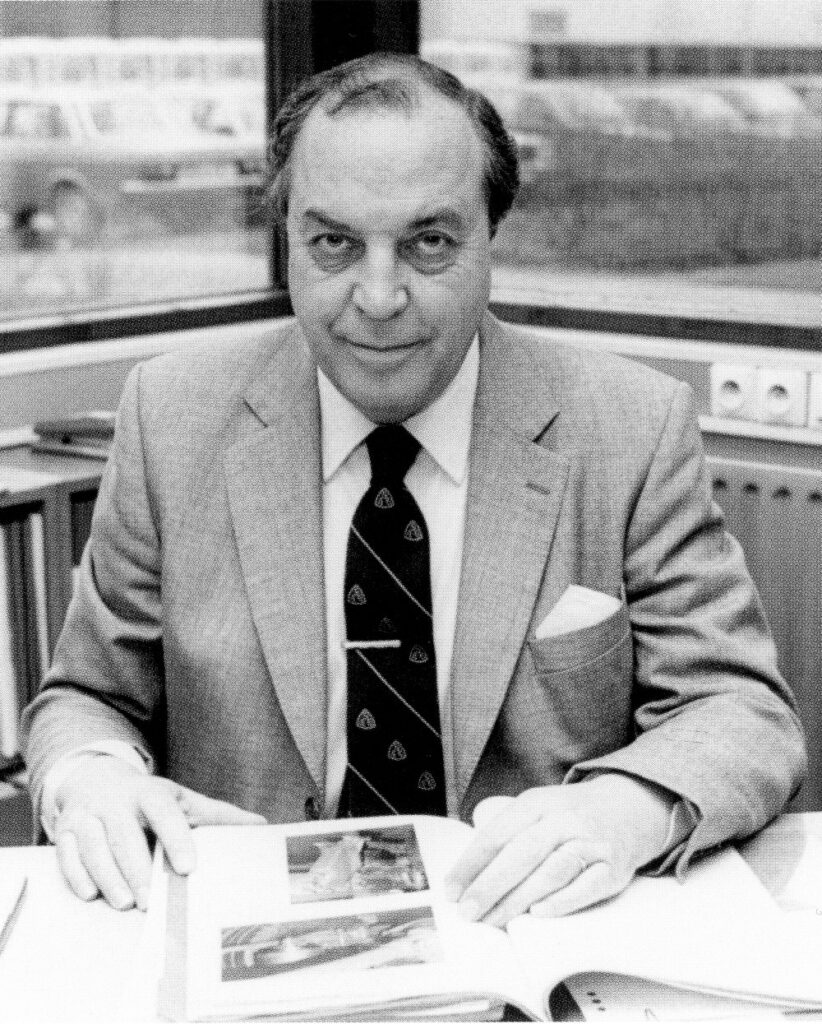
When Gösta Vallin became involved in the classified sports car project, he started with a detailed planning of the development of the car, and after a hasty visual inspection carried out at a quick view, there were some comments on immediate-only measures that needed to be staged, which were put forward in a memo on September 3, 1958. Among other things, Vallin came to the following conclusion: The chassis specification had to be clarified before trimming of characteristics with respect to steering, suspension, brakes, cooling and power over the transmission could be carried out; front disc brakes are preferable; another solution to the handbrake was required; outlays had to be made to determine that the B18 engine could possibly be built in. The proposed steering wheel was not satisfactory from a safety point of view and the location of the signal button should be investigated and the proposed cooler did not meet requirements in hot climates. The instrument board, including the design of buttons for switches, did not meet safety requirements and Amazon’s car heater could not be considered for this car. In addition, the windshield wipers did not have a large enough drying area. Vallin also stressed that the prototype types should only constitute styling proposals and that future body manufacturers should be left free to submit design proposals for review and approval by Volvo. With regard to particularly obvious shortcomings, which were noted during the inspection of the prototypes, Vallin pointed out, among other things, certain strength issues regarding the sections around door and window openings that should be made closed and equipped with knot plates. He also stressed the importance of careful anchoring of pole sections in wheel arches and cross-reinforcement at the rear and the front ones in the torpedo side. Another recommendation was that the body designer must be made aware of the tightness requirements Volvo placed on its products and solve these problems satisfactorily on the sports car.
Gösta Vallin says: “Some time after the holiday in 1958, Tor Berthelius called me and confided that a new sports car had been planned and that three test cars had been built at Frua. Before that, I had only heard from my colleague Raymond Eknor that something was going on. Eknor had supplied the basis for a shortened and lowered chassis on the basis of amazon details. Vallin remembers his reaction and how he sighed when he heard it, as he then suddenly recalled what had happened a few years earlier with Volvo Sport when Vallin was suddenly sent to California to reconcile a reinforced plastic body with a modified Volvo chassis. Anyway, a few days later Vallin was called to a secretive evening show in an old rope warehouse in Älvängen not far from Volvo in Gothenburg. Gösta remembers that it was difficult to get the practicalities together that night because his wife and four-year-old son were hospitalized and Vallin couldn’t get hold of anyone who could babysit with their seven-year-old daughter, so he took her along. She was more interested in policemen, guards and German Shepherds than in the elegant three cars on display. The other visitors were part of Volvo’s board and management. After the screening, the party disbanded and Vallin went home without having been given any further information. After a few days, Tor Berthelius took up the project with Vallin and explained that the drawing department would probably be commissioned to do the design to put the car into production in a limited volume. The assignment was classified and was to be carried out outside Volvo. It was hoped that the new sports car could help boost sales of the Amazon, especially in the United States. Some possible premises around Gothenburg were reconnoitered, but the requirement for confidentiality would be difficult to cope with. It was not until much later that Vallin became aware of the soundings that Volvo had already carried out abroad.
From a minutes of a meeting of Volvo’s project management for the sports car, held on the ropes track on September 11, 1958, a 37-point list of measures required to advance from the prototype stage towards a pre-production of the car can be deduced. The meeting, which was recorded by Raymond Eknor, was titled “P1200X” due to the high secrecy under which the project was conducted and the meeting was attended by Director Tord Lidmalm, Chief Engineer Tor Berthelius and engineers Helmer Petterson, Pelle Petterson, Gösta Vallin and Raymond Eknor.
During the review, Helmer Petterson was commissioned, among other things, to develop new proposals for; rear reflectors and review different countries’ requirements for the placement of lamps and lanterns, rear number plate placement and lighting, locks for tailgates, design and assembly of American standard radio, new dashboard with new placement of instruments and control buttons, exit handles and glove compartments, larger radius in the corners of the windshield and fastening of the hubcaps. Helmer was also commissioned to investigate the location and legality of the three-crown in the Volvo emblem on the C-pillar.
Volvo took it upon itself to obtain approval of lighting devices and glass, as well as to investigate the location of a 1,8 liter engine. The passenger car drawing office (PR) would review a new type of heating system, investigate whether larger coolers were required and whether standard coupling was sufficient, design new cardan shafts and investigate the issue of disc brakes, but for the time being use Amazon’s new Duo Servo brakes with special pads. The yet-to-be-appointed body designer would be tasked with resolving the issues surrounding the exhaust pipe pass-through in the body to be retained, the gasoline filling to be moved to the left side, the problems with the door hinges, the sealing problems and new windshield wipers. In connection with the body design, Volvo would also investigate the possibility of performing the sports car as a convertible.
It was found that the gas tank would hold 45 liters, that the gearbox would be M4, that the gas tank would use 5.90 x 15″ tires as well as a modified steering gear from the Amazon (GD18), that the rearview mirror would be placed at the top of the windshield and that the steering wheel would be plastic or hard rubber. It was decided that the position of the gear lever would be retained but that “the lever would be cut to the same length as in the blue car” (Frua prototype X1) and that seat belts in the front seats would be standard. One of the things that was referred to in the future was to decide on upholstery in terms of material and type. Furthermore, it was found that the rear ventilation window should be replaced with fixed window as well as optional equipment consisting of speed pilot, i.e. a rally instrument, and oil cooler.
It was probably the result of this work with subsequent investigations that served as the basis for the “Specification for Volvo P958” that prospective manufacturers (Drauz and Pressed Steel/Jensen Motors Ltd.) were left to consider in the final bidding process during November and December 1958.
Pressed Steel Co Ltd and Jensen Motors Ltd
Pressed Steel Co. Ltd. and Jensen Motors Ltd. The first contacts between Volvo and Pressed Steel regarding the sports car were probably made as early as the spring or early summer of 1958. On July 15, Volvo sent a letter to Pressed Steel Co. Ltd. in Cowley, Oxford, informing the company that it wanted to establish a new contact between the companies in mid-August to discuss Volvo’s new sports car project again. This resulted in Pressed Steel being very active and in turn sending inquiries on a couple of occasions during August to Director Svante Simonsson via its Sales Director, Mr. D.D. Hobday, where they clearly expressed their desire to give a quote to Volvo on the sports car. It asked for additional information and wondered if Volvo would consider sending a prototype to Oxford to enable Pressed Steel to present an even more accurate quote. Pressed Steel was very keen not to miss this deal.
Pressed Steel makes a quotation
The directive from Volvo’s management read as follows: “the production version of the sports car should follow the Frua model as far as possible”. By mid-November 1958, contacts were frequent both by letter and by telephone. On November 15, D.D. Hobday at Pressed Steel sent a quote to T.G. Andersson regarding Volvo’s “New Sports Model” and after a couple of days a revised one arrived. Hobday offered the following: “Body Shell for your new Sport Model to be supplied to Jensen Motors Ltd. as per the attached specification, shipped in the white, oiled is £109 Sterling per each.” It was further stated that “additional cost for Body Engineering, design and manufacture of the necessary Tooling £500000.” The price was based on an initial order of 10000 bodies and a production rate of 100 per week in accordance with the prototype and overall specification that Volvo provided Pressed Steel with on November 10. Although Volvo had not yet confirmed the order, Pressed Steel set out to start developing five so-called pre-series bodies that would be available about a month before production from the production tools was planned to start. For the pre-series bodies, it was intended to charge £4000. In terms of payment and deliveries, it was desired that one-third were invoiced in advance, one-third in October 1959, and the remaining third when Pressed Steel began shipping bodies from the pressing tools. It intended to supply finished bodies freely Jensen Motors Ltd. in West Bromwich and commence this in September 1960, reaching full production rate in January 1961, with 100 bodies manufactured per week.
The Volvo – Jensen Motors Ltd. cooperation
The first contacts between these companies regarding the Volvo sports car were probably made in the spring or summer of 1958. One of the countries that Raymond Eknor visited in search of suppliers in 1958 was England. Eknor visited Bristol and then Jensen Motors Ltd. who assembled Austin-Healey. When one of the sales managers at Pressed Steel visited Volvo and was informed of Volvo’s needs and plans, Volvo expressed its wishes for Pressed Steel’s commitment to body production. This then resulted in Jensen Motors being contacted in a second step as they were judged to have the competence to be responsible for the final assembly, painting and completion of the sports car. In England, by this time Norcross had taken control of Jensen Motors Ltd. and it was now in a stronger financial position compared to the difficulties of previous years. Jensen Motors had begun looking for suitable contract assignments to complement the production of Austin-Healey and the construction of its own cars. It was here that Volvo’s and Jensen’s paths would meet, via a contract that meant that Jensen would finish, paint and complete Volvo’s sports car. According to Gösta Vallin, however, T.G. Andersson is said to have personally preferred Sankey Ltd., which was a large group headed by Geoffrey Sankey, but the negotiations had dragged on and Sankey had ultimately declined.

At Jensen Motors Ltd., a completely new factory unit had been erected. The premises were originally intended for the manufacture of Austin, but as Austin had been forced to carry out relatively large downsizing at this particular time, the premises suddenly stood empty and the capacity seemed to exist. It was, of course, seen as an opportunity for both Jensen and Volvo, two parties that at the time were under a bit of pressure, but for different reasons. During the autumn of 1958, Volvo held ongoing talks with Jensen, where Volvo’s contact person was mostly R.A. Jensen. He appeared to have had close contact with Pressed Steel, but Volvo expressed concern about essentially two issues regarding possible cooperation with Jensen Motors Ltd.; (1) that they did not have the capacity to deliver on what was intended in future contracts, namely to paint, assemble and produce the sports car at the pace required by Volvo; (2) Jensen Motors’ relationship with British Motor Corporation.
The first documented evidence of the three companies’ joint meetings to discuss the sports car project is at a meeting at Pressed Steel Co. in Cowley on November 12, 1958 between H.R. Barber (Pressed Steel), Helmer Petterson (Volvo) and E.W. Neale (Jensen Motors). Something that is noteworthy is that Helmer Petterson at the meeting revealed confidential financial information from quotes from both Karmann, NSU and Drauz. From this it could be seen that in terms of preparation and production costs, NSU was clearly the most expensive and Karmann the cheapest, however, about 6% higher than Volvo’s own estimate. Jensen’s quote was based on the stripped-down P958-X3 that had been shown at Pressed Steel in Cowley. Then followed a number of lower-level meetings and contacts and on November 17 a formal meeting was held at the Savoy Hotel in London when representatives of Volvo, Pressed Steel and Jensen Motors agreed to proceed with creating the necessary agreements to proceed towards “one” final contract.
Volvo’s concerns were both addressed and dismissed in a letter from R.A. Jensen on November 18, 1958, in which he had his position communicated; (1) The capacity issue: R.A. Jensen referred to the new factory unit built in West Bromwich, where new floor space was continuously added. Over the next twelve months, R.A. Jensen predicted that the available capacity for Volvo’s sports car would double, and that additional funds were available to increase capacity, namely Jensen could expand to two shifts; (2) With regard to the relationship with British Motor Corporation (BMC), R.A. Jensen pointed out that they had a ten-year good cooperation behind them and that there were no financial or other obstacles to what Volvo might be affected by. BMC had no formal impact on other assignments Jensen Motors undertook. However, it would turn out some time later that Volvo’s fears were by no means without foundation.
It is interesting to note how the written communication took place between Volvo and Jensen Motors Ltd. During November and as late as December 1958, several key documents appeared to be the basis for future cooperation, e.g. “Specification of Chassis P1200X, dated 15th of September”, communicated between Volvo and Jensen Motors Ltd via Pressed Steel Ltd. Steel.
The contract between AB Volvo and Pressed Steel Co. Ltd
The thing was finally clear – the sports car would be manufactured in the UK. Volvo reached the necessary agreements on the manufacture and assembly of the sports car with Jensen Motors Ltd. and Pressed Steel Co. Ltd. during December 1958. A two-sided agreement between the three parties confirms this tripartite settlement. The car was already then more than a year behind the original schedule.
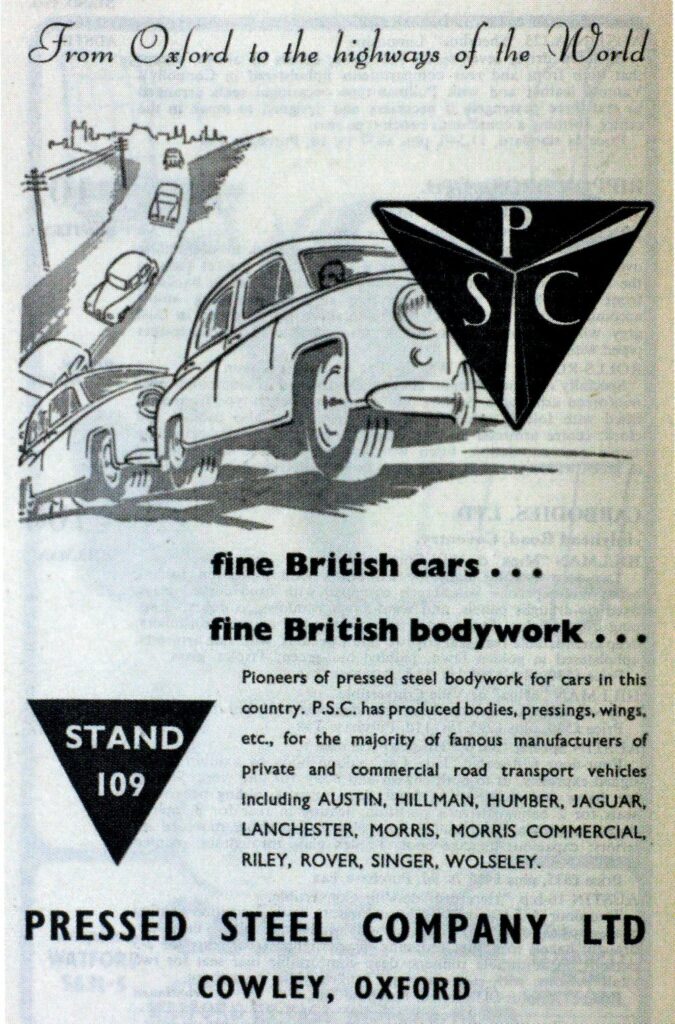
On December 9, 1958, there was a “Draft Agreement” between “Aktiebolaget Volvo in Gothenburg and The Pressed Steel Company Limited in Cowley in the County of Oxford” coordinated by the law firm Clyde & Co in London. The agreement also included a link to Jensen Motors Ltd., which undertook to provide Volvo with certain parts and materials for the car and to be responsible for the final assembly and completion of the sports car. It also states that Volvo undertook to provide Pressed Steel with “the necessary equipment” to enable them to develop the necessary tools that would enable the manufacture of 300 bodies per week and an ability to produce a total of 100000 bodies. It is further stated that Volvo would buy the equipment from Pressed Steel, which would design, maintain and keep it available on its premises. Volvo’s compensation to Pressed Steel for this amounted to £518000
Finally, on New Year’s Eve 1958, T.G. Andersson confirmed in a letter to D.D. Hobday at Pressed Steel in Cowley what they had agreed by telephone earlier that day, that AB Volvo accepted Pressed Steel’s offers from December 8 and 17 and commissioned them as extensive construction, production of tools, jigs and fixtures and development of complete body shells (“body shells in the white, oiled”) and front beam to the sports car, to be delivered to Jensen Motors Ltd. in West Bromwich where the car was to be assembled. The agreement included three handmade body prototypes to be ready on September 30, October 24 and December 12, 1959
Since Volvo and Jensen Motors had not yet reached a final agreement on December 31, Volvo built in a reservation towards Pressed Steel that would step in if it failed to conclude negotiations with Jensen Motors. Andersson asked Pressed Steel to proceed according to plan with body and tool manufacturing design, and at the same time announced that he intended to go over to England in the first week of January 1959 to complete the business with Jensen Motors Ltd. The final agreement between the parties was reached in 1958, but during January 1959 discussions continued between Volvo and Pressed Steel regarding certain details, but finally Sales Ddirector D.D. Hobday in a letter on February 10 was able to confirm that all the details had been investigated and that the real cooperation could now begin.

The order included 10000 cars with series delivery to begin in September-October 1960. All pressing work was to be done in England by Pressed Steel and when Volvo signed the agreement with Pressed Steel, Volvo lived in the belief that they would be responsible for the final body design for the sports car and that this would take place at Pressed Steel’s factory in Cowley. Unfortunately, this did not happen, as Pressed Steel had planned differently. Pressed Steel later announced that all pressing work for the sports car would take place at its plant in Linwood, Scotland. If Volvo had been able to prevent this, it would certainly have done so, because it would later turn out that the choice of manufacturing location would have significant and, unfortunately, negative consequences for what would happen later.
As this unfolded, heavy industry in the north of England and Scotland had recently been hit hard by the recession, while industry as such was under strong transformation and many workers were at risk of unemployment. The plant in Linwood had previously manufactured railroad cars, which was something completely different from exclusive sports cars. The assessment was that these conditions naturally characterized the labor that they had access to and used and that at the same time it would be a huge challenge for Pressed Steel in Linwood to go from the manufacture of railway cars to bodies for sports cars on behalf of a focused and quality-conscious company from Sweden. Thus, the conclusion is that the above factors came to characterize the manufacture of bodies in a negative way, which initially resulted in a lot of quality problems on the bodies.
Further to this, it can also be noted that Volvo had previously reached an agreement with Carozzeria Pietro Frua in Turin, who had developed the first three prototypes, that they would receive a lump sum of $25000 in royalties if the sports car was put into production
Jensen Motors Ltd to assemble the cars
As early as November 1958, Volvo expressed concern that Jensen Motors Ltd. would not be able to deliver on what it intended to promise in the contract, namely to paint, assemble and produce the sports car at the pace discussed beforehand. Even Mr. Hobday at Pressed Steel referred to this problem in his letters to Volvo. A meeting at the Savoy Hotel in London in November 1958 was attended by Richard Jensen and Eric Neale of Jensen Motors, two representatives from Pressed Steel and four representatives from Volvo. At the meeting, a preliminary agreement was reached and Jensen was then able to begin his preparations in earnest to be able to carry out the mission.
On 9 December 1958 there was a draft agreement between “Aktiebolaget Volvo in Gothenburg” and “Jensen Motors Limited in West Bromwich” coordinated by the law firm Clyde & Co in London. It followed from the agreement that: The production shall be carried out in such a way that Volvo provides Jensen with certain parts and materials, Pressed Steel Co. Ltd. supplies bodies for Jensen and Jensen in turn also provides certain parts and materials and takes care of painting the bodies and assembling and otherwise preparing the cars to delivery ready condition. The very extensive agreement stipulated that the sports car would be manufactured partly by Volvo and partly by Jensen Motors at their factory in West Bromwich, in accordance with the prototype already delivered to Jensen and the drawings and specifications referred to in the agreement. Volvo would supply components and materials at such a pace and quantity that Jensen’s commitments could be met. Jensen would manufacture the cars for delivery directly to the dealers and the vehicles would be in full condition and ready for use by the customer.
According to the draft agreement, Jensen Motors was to prepare to establish by October 1, 1959, a concept for the design and manufacture of the sports car including current components and by December 1, 1959, all tools and associated equipment would be ready. Paragraph 7 of the agreement said that the manufacturing equipment would be designed to enable the production of 100000 sports cars with a production rate of 300 cars per week. Before the car was put into production, up to 10 test cars were to be produced, at a cost of £1600 apiece, and used for Volvo’s technical tests and preparatory marketing activities. After that, Jensen Motors would manufacture 100 so-called zero-series cars where the manufacturing equipment would be used but where the final finish would be done by hand.
As for the termination clause, a special clause was incorporated for this. It clarified that, in view of the comparatively long time that was estimated to elapse before the entire ordered number of cars had been delivered and the risk of significant changes in the market situation occurring in the meantime, Volvo was granted the right to terminate the contract with Jensen Motors no later than one month after the 2000th sports car was delivered, in return for Volvo paying a sum to Jensen in compensation.
The second draft agreement was established on December 15, 1958, and final agreement between Volvo and Jensen Motors Ltd. was formally concluded in early January 1959 after additions and amendments made on January 5. Between 17 and 20 December 1958, Bengt Albrektsson was in London at Grosvenor House, Park Lane to conclude negotiations with Pressed Steel Co. Ltd. and Jensen Motors Ltd. On New Year’s Eve 1958, Jensen Motor’s CEO, Mr. R.A. Jensen, sent a letter to T.G. Andersson confirming that they agreed on scope and principles and that only minor adjustments to small detals remained, in which he asked Jensen Motors’ representative Mr. Wisdom at the firm “Frere, Cholmondeley&Nicholsons” to remedy and then promptly return the amendments to Volvo.
The final contract included 10000 cars with a minimum production rate of 100 cars per week with the right for Volvo to be raised with six months’ notice to Volvo’s maximum requirement for a maximum production rate of 200 per week. Volvo’s remuneration to Jensen for the design, drawings, planning and production plan amounted to £79500. This includes-the initial two prototypes and three pieces of pre-production cars. In early 1959 this was changed to include only three prototypes at a cost of £2000 apiece. Volvo would pay £ 253.16s for each completed cars and for the 250 cars taken Volvo would pay £50000 and for the subsequent 4750 cars an additional £65000. Jensen would under the contract maintain a control organization adapted to a “high quality car” and Volvo would also have the right to establish its own control function at the factory, limited to a maximum of three inspectors to whom Jensen would provide the necessary office space. In addition, Jensen Motors was to ensure that Volvo, where possible, was given the opportunity to control materials provided by subcontractors.
One of the more important sections of the contract, which rightly caused Jensen Motors’ legal representatives to react strongly against, was the clause in the contract that regulated the control and inspection of the sports car, which they judged meant that if one of the cars did not meet Volvo’s high quality requirements, it would be interpreted as a breach of the agreement in the way that Jensen had not established a sufficient organization to meet Volvo’s quality requirements. Jensen would also, following orders from Volvo, ensure that spare parts for the sports car were manufactured and delivered with the exception of the parts that Volvo itself would provide. The spare parts would be possible to be delivered at the same time as the first series-produced sports cars and to the extent that Volvo considered necessary in view of completed deliveries and service in various sales markets. This obligation would also continue for a period of 15 years from the date of delivery of the last car, but not unless Volvo transferred the production of the sports car to its own or other workshops during that time. One detail worth noting in particular is that nowhere in the remaining documents from Jensen Motors’ archives are there any trace of either agreements or contracts between Jensen Motors and suppliers of the components for which they worked in the British Midlands and for which Jensen was fully responsible.

Initially, the intention was that the first Jensen-built prototype would be completed in December 1959 and the second prototype in January 1960, provided that Pressed Steel delivered the first body to Jensen by September 30, 1959. According to the first draft agreement, the first five test cars were to be delivered to Volvo between 1 October 1959 and 15 January 1960. The next test cars that Volvo would have access to would be delivered by Jensen within a reasonable time thereafter upon request from Volvo. The 100 zero-series cars were to be delivered by Jensen to Volvo evenly distributed during the period between April 1 and June 30, 1960. On 1 September 1960 Jensen would start formal series production of the sports car for delivery, at a cost of £305 apiece. From the final agreement, it became clear that the schedule had already been revised and delayed because it stated that Jensen would begin series production of the sports car in January 1961 in order to reach a production rate of 100 cars per week in February of the same year, something that in reality also did not come to fruition. In summary, there were already initially, when the agreement was signed by the various parties, serious deficiencies in Volvo’s insight into Jensen Motors’ real capacity to manufacture, paint and assemble the sports car at the pace that Volvo wanted
In early February 1959, after a late addition to the §24 of the contract concerning the control organisation at Jensen Motors, and the production of three prototypes, T.G. Andersson informed directors Gunnar Engellau and Per Ekström and notary Bengt Albrektsson that the contracts with Pressed Steel in Cowley-Oxford and Jensen Motors Ltd. in West Bromwich had been signed, that the work was underway and that advance payment of the initial costs would take place immediately. The project was now more than a year late based on the original schedule. Design and tool manufacturing had to start afresh and the final body design for the sports car would be created in collaboration between Pressed Steel and Volvo.
In order to keep the sports car project a secret from competitors and the market for as long as possible, Volvo was careful to point out to Jensen Motors that they were in no way allowed to disclose anything about the sports car project, which internally within Jensen went by the code name “Ares” (which according to Greek mythology is the god of rage and violence). At the Volvo board meeting on March 20, 1959, Gunnar Engellau presented the sports car project and had his board informed that an agreement had been signed with Pressed Steel and Jensen Motors for the production of 10000 cars with the option to cancel after 5000 cars were manufactured.
